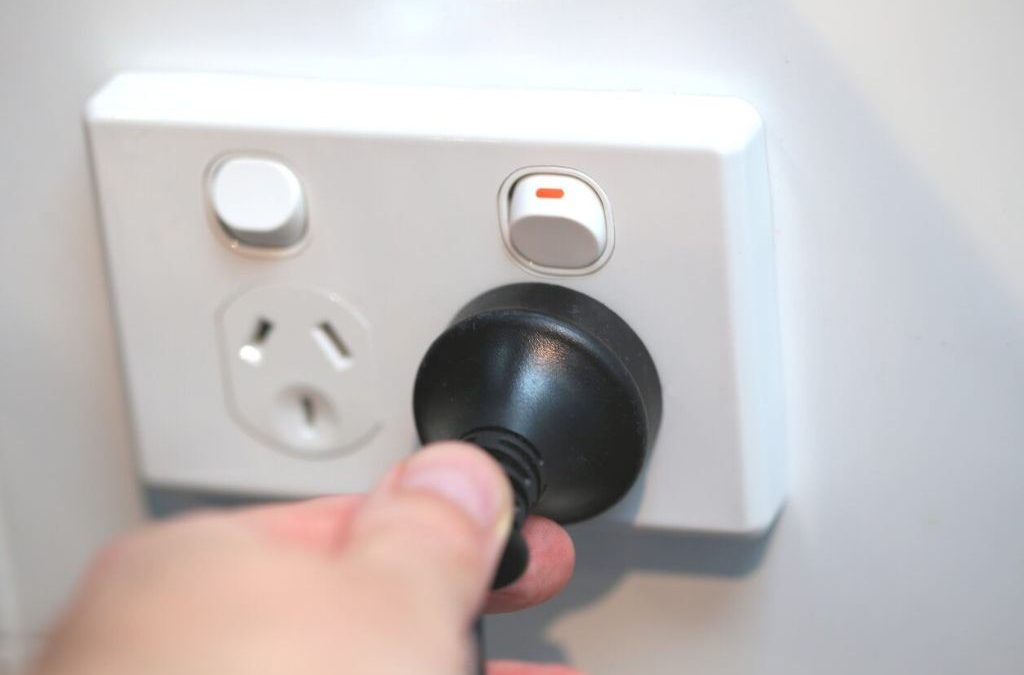
You flick on the kettle, and … nothing. Hmm. The lights are fine, but the power points not working. Before you panic, grab the toolbox, or start guessing at random – let’s go through a clear, safe, and legal way to work out what’s gone wrong.
At Static Electrics, we help Queensland homes every day with electrical faults like these, and we know how confusing they can be. Whether it’s the power points not working, tripping switches, or only one room affected, we’ve designed this guide to walk you through what to check – and when to call a professional. It should work for absolutely any power point issue – so let’s give it a whirl:
Step 1 – Stay safe & stop guessing
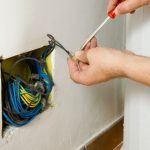
Electricity isn’t at all like plumbing – you can’t safely “have a go.” In Australia, only licensed electricians can legally repair or replace electrical wiring or fittings. So, no pulling powerpoints apart or swapping wires. Your role is observation and basic reset checks only.
Do you:
- Smell burning?
- See scorch marks?
- Hear buzzing?
- Notice the outlet feels hot?
Switch off the power at the board IMMEDIATELY and call a qualified electrician.
Step 2 – Confirm it’s not the appliance
It sounds obvious, but rule it out first. Try the same appliance in another outlet. If it works elsewhere, the original power point is likely the issue. If it doesn’t, your appliance is at fault – not your home wiring.
Step 3 – Check other outlets
Sometimes, it’s just one circuit affected. Power points not working but the lights are? That’s because lighting and power circuits are separate.
So:
- Walk around and test several outlets
- If only one room is dead, you might have a tripped safety device or a circuit fault.
Step 4 – Inspect the safety switch & circuit breakers
If your safety switch keeps tripping, it’s doing its job – protecting you from a fault somewhere on the circuit.
So:
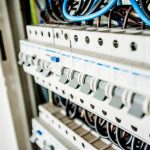
- Go to your switchboard and look for the RCD or labelled breaker in the “OFF” position.\
- Turn off and unplug appliances on that circuit.
- Reset the safety switch.
- Plug things back in one at a time until it trips again – that’s your culprit.
If the safety switch tripped again instantly with nothing plugged in, the wiring itself could be damaged or full of moisture – that’s a job for a licensed electrician.
Step 5 – Identify location-based problems
If you have power points not working in one room, water ingress or loose connections might be the cause. Bathrooms, kitchens, and outdoor outlets are common trouble spots due to moisture. But never test or dry outlets yourself! Leave them switched off and call an expert.
On the other hand, if you have lights not working but power points are, that’s a separate lighting circuit issue – still best handled by a professional electrician, but it helps you describe the problem more clearly when calling for help.
Step 6 – Look for signs of overload
Australia’s homes are full of devices – phone chargers, heaters, fridges, entertainment units – often stacked on one outlet. If you notice some power points not working suddenly after plugging in a high-draw appliance (like a heater or a kettle), you might have overloaded the circuit:
- Unplug a few things
- Wait a minute
- Try again.
If the issue persists, that circuit might need upgrading to handle the load safely.
Step 7 – Outdoor & wet-area checks
Outdoor or garage outlets are often connected to weather-exposed circuits. Rain or humidity can cause nuisance tripping or corrosion – especially in muggy places like Brisbane.
If your power point outside stops working after wet weather:
- Leave it alone until it dries
- Then test again later.
If it still fails, moisture inside the fitting could be the cause – it must be replaced immediately by a professional.
Step 8 – Know when to call a pro
If you’ve tried the basics and the issue continues, it’s time to call in an expert.
Common professional fixes we can handle include:
- Replacing damaged or melted powerpoints
- Locating and repairing faulty wiring in the wall cavity
- Testing insulation resistance and moisture levels
- Upgrading old circuits or RCDs to modern safety standards
- Checking for pests or corrosion affecting the line.
Electricians use advanced diagnostic tools to pinpoint faults safely – something no homeowner can legally or safely do themselves.
Step 9 – Prevent future power point problems
Once things are back on, it’s worth thinking about prevention. Here’s how:
- Avoid daisy-chaining power boards.
- Use surge protectors for sensitive electronics.
- Have older outlets replaced with new, tamper-resistant ones.
- Keep outdoor outlets covered and sealed.
- Get your switchboard inspected every few years.
Step 10 – Trust licensed experts for repairs
If the circuit keeps tripping, or outlets still won’t work, don’t risk DIY electrical fixes. A faulty power point can hide serious dangers – shocks, melted wiring, even fire hazards (or worse).
At Static Electrics, our licensed Brisbane electricians & Sunshine Coast electrical experts can:
- Diagnose faults in minutes with professional test gear
- Replace or rewire damaged outlets safely
- Upgrade your safety switches for modern protection
- Provide same-day service with upfront pricing and guaranteed workmanship.
Need power point help fast?
Power points not working … still? If the problem wasn’t a simple reset or unplug, it’s best to stop playing with electricity and call the experts. A power point that’s faulty or overheating is a real hazard – and under Australian law, it’s illegal to try electrical repairs yourself.
Get your power points working safely again with Static Electrics – the trusted Brisbane & Sunshine Coast electricians. Fixed prices, tidy tradies, guaranteed results. Call or book online today.