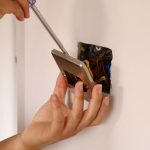

It all started with a call from a Brisbane homeowner who had tried to replace a light fitting. They’d watched an online tutorial, switched off the breaker, and were about to start when they froze – the wires didn’t match the colours in the video. What looked like the neutral in one guide was active in another. Their confusion was understandable – electrical wiring colours in Australia have changed over time, and getting them wrong can be extremely dangerous.
So if you’ve ever looked at the back of a power point or light fitting and wondered what the colours mean, this one’s for you.
We’ll walk through:
- The difference between old and new wiring colours
- How they apply in your home
- And what you need to know to stay safe.
Let’s get started:
1. Why wiring colours changed in Australia
Before 2000, Australia used its own distinct colour system for household wiring. But when global electrical standards were harmonised under the IEC (International Electrotechnical Commission), Australia adopted a new set of colours to match those used in Europe and much of Asia.
That’s why you might find old electrical wiring colours in one part of your home and new ones in another – especially if you’ve had renovations or extensions done at different times. Confusing, we know – but this kind of thing is actually really common, and very confusing even for experienced DIYers.
2. The current Australian electrical wiring colours
In modern homes and businesses, the Australian electrical wiring colours follow the AS/NZS 3000:2018 wiring rules. Each wire colour has a specific purpose and must always be connected correctly.
To be very clear:
- The active (or live) wire is BROWN – this is the one that carries current from the supply to your outlets and appliances.
- The neutral wire is BLUE – it completes the circuit by carrying current back to the source.
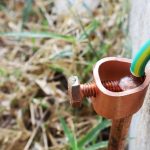
- Finally, the earth (or ground) wire is GREEN WITH A YELLOW STRIPE – its job is to provide a safe path for electricity to travel if there’s a fault.
These are the same colours you’ll see inside a modern power plug, light fitting, or switchboard. They’re designed to make identification easy and reduce the chance of confusion, especially as these colours are now standard across most of the world.
3. The old electrical wiring colours Australia used
Before the early 2000s, Australian wiring looked quite different from today. Older homes often still have this system, and they’re still especially common in ceilings, behind power points and around switchboards.
Under the old colour code:
- The active (or live) wire was RED.
- The neutral wire was BLACK
- And the earth (or ground) wire was SOLID GREEN.
If you come across red, black, and green wiring in your home, it means the system hasn’t been updated. Mixing these old colours with the new ones (brown, blue, and green/yellow) can be dangerous because the meanings don’t line up – for example, black used to be neutral, but in the modern system, black is a live wire in three-phase setups.
That difference has caused plenty of wiring mix-ups and even electric shocks, which is why identifying your wiring type correctly is so important.
4. Understanding multi-phase & 240V wire colours in Australia
Most homes run on single-phase 240-volt circuits, but some larger properties and businesses use a multi-phase supply. The 240V wire colours Australia follows are the same as the household standard:
- BROWN for the live wire
- BLUE for neutral
- GREEN WITH A YELLOW STRIPE for earth.
In a three-phase setup, each live phase is a different colour so electricians can identify them quickly. Modern systems use:
- BROWN for the first phase (L1)
- BLACK for the second phase (L2)
- And GREY for the third phase (L3).
If your wiring is older, you might still see RED, WHITE and BLUE used for those three phases instead. That older colour scheme is common in workshops and older commercial buildings, so always double-check before making any connection or repair.
5. Step-by-step: How to identify what you’re dealing with
If you’re unsure which wiring colours your property uses, here’s a safe approach:
Turn Off Power At The Main Switchboard: Never assume a circuit is dead because a switch is off.
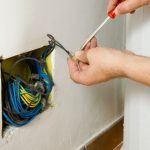
Visually Inspect Wires In A Known Area: Check behind a power point or light fitting only if you’re confident and the power is isolated.
Look For Colour Clues: Brown and blue indicate newer wiring. Red and black usually mean older. A mix means partial rewiring.
Check for Green/Yellow Earth Wires: Solid green wires are older – the striped version came in with the modern standard.
Label & Photograph: If you’re planning work, label what you find and take photos before touching anything.
Call A Licensed Electrician: Colour alone isn’t always reliable. A local electrician can test each wire with a multimeter and verify connections properly.
Never Mix Old & New Colours: If you’re rewiring or adding to a circuit, all colours should match the same system for safety and compliance.
These steps make this guide a clear, practical reference for anyone unsure what colours electrical wiring should be in their home.
6. The dangers of getting it wrong
Electrical colours are not just visual – they’re safety codes. Confusing active and neutral can cause serious harm:
- Electric shock
- Appliance damage
- Fire risk
- Non-compliance
- Voiding insurance claims.
Remember – even something as apparently small as wiring a power plug incorrectly can turn into a major hazard.
7. When to call the experts
If you suspect your home still has old electrical wiring colours Australia used decades ago, or you notice burnt insulation or mismatched wiring, don’t take a massive risk. Rewiring to the latest standard isn’t just about convenience – it’s about keeping your family safe and your property compliant.
A licensed electrician can quickly:
- Identify which system you have
- Test for faults
- Replace dangerous or outdated wiring.
When in doubt, call a sparkie
So, remember the modern colours of electrical wiring in Australia:
- BROWN is live.
- BLUE is neutral.
- GREEN/YELLOW is earth.
What are the colours of electrical wiring from Australia’s past? Those older systems used RED, BLACK, and GREEN. Knowing which one you’re looking at – and never guessing – is the key to safety.
Electrical work isn’t for trial and error. When in doubt, switch it off and call a professional. Need help identifying or updating your home wiring? Call Static Electrics for same-day service across Brisbane and the Sunshine Coast.