Some time ago, we stopped counting just how often clients just like you were left scrambling when their solar power system – a ‘green’ lifeline for slashing soaring power bills – suddenly needs an emergency shutdown.
Maybe it’s a:
- Sparking inverter
- A storm-battered panel
- A nearby fire risk
- Or something else entirely.
But knowing – immediately – the shutdown procedure for solar system setups like yours can save your equipment, your home, your family – and your sanity. Because remember, while your solar setups – the panels, inverters, and maybe even your storage batteries – are built tough for Queensland and beyond, emergencies don’t care at all about that. So no matter where you are, if you’ve got a solar setup, knowing exactly when and how to shut down and restart safely is a true must-know.
For our exclusive step-by-step guide, we’ve considered why it matters and when to act – and we’ve made our instructions as generic and universal as possible. No matter what’s on your roof and what it’s connected to, this should be all you need to safely power down and switch on solar again – suitable to just about every system in Australia.
When & why you’d shut down your solar system
Never forget – emergencies don’t politely knock on your front door. And another thing to not forget – shutting down your solar system isn’t routine. In fact, it’s a critical response to specific risks, and you definitely need to know all about:
Fire Hazards: Nearby bushfires and electrical faults demand immediate isolation to cut the power and eliminate the lethal risk.
Storm Damage: Cyclones and hail, which us Queenslanders are reminded of all too often, can crack panels and flood inverters, requiring a shutdown to prevent dangerous and destructive shorts.
Equipment Failure: Smoke from an inverter or the odd buzzing panel definitely signals trouble – and shutting down INSTANTLY will hopefully sidestep an absolute nightmare.
Maintenance or Rescue: Emergency repairs, like roof leaks, or firefighters needing safe access, means no live current – it’s just that simple.
None of these are hypotheticals – because we’ve seen with our own eyes panels furiously sparking post-storm, and shutting down a lot faster would have been a lot, lot better. Knowing the exact solar shutdown procedure is how to stay ahead of the game – for everybody’s sake:
Universal steps to shut down your solar system – Fast
As you probably already know, Australian solar systems vary, like:
- Grid
- Hybrid
- Off-grid
- Single phase
- Three-phase
- With/without batteries
- 100 distinct brands and countless different models.
But by focusing in on the PV array main switch, we – and you! – can basically shut down any solar system. It’s all based on Solar Accreditation Australia (SAA) guidelines and AS/NZS 5033 standards, applying to just about every single setup bar none. Always check your manual after the emergency is over, but we’ll go out on a limb to declare this:
It works!:
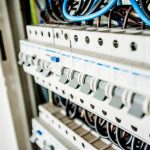
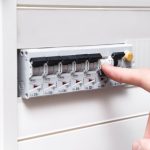
1. Locate the solar supply main switch
Find the AC isolator switch near your inverter:
- You’ll usually find it on the wall or in the switchboard.
- Look for “Solar Supply Main Switch” or something like that.
- It’s there to cut or restore panel-to-inverter power.
- TURN IT OFF!
2. Turn off the inverter
Now, head to the inverter:
- Flip the AC switch to OFF – you’ll usually find it near the display.
- Now turn the DC switch off – sometimes it’s somewhere else, like near the panels.
- You should now have stopped both AC grid flow and DC panel output.
3. Isolate the PV array (Panels)
Head to your panels’ PV array main switch:
- You’ll usually find it at the inverter, but it could be a rooftop DC isolator.
- Switch if OFF to kill DC current from the panels.
- If you can’t find or access it (if it’s on the roof, for example, skip this step).
But don’t worry, what you’ve done already has made the situation a lot, LOT safer.
4. Shut down battery storage (If you have it)
For hybrid systems, find the battery isolator switch:
- You’ll find it near the battery or the inverter.
- Turn it OFF to cut off the stored power as well.
Remember, some systems auto-trip, but you can look into what happened with yours later on.
5. Verify shutdown
Your inverter screen should now be totally blank, with none of the usual hum or lights:
- If it’s still live, DON’T TOUCH A THING!
- Call a licensed solar technician.
But if it really is all dead, you’ve successfully stopped all power generation and flow.
How to turn your solar system back on
Emergency over now? The fire’s out, the storm has passed, the fault is fixed? We’ll need to restart the system – but doing so safely is crucial. Here’s how to turn on solar panels and everything else related to your system:
1. Check for damage
Before powering back on:
- Inspect the panels, the inverter, and the wiring.
- Look for cracks, burns and water ingress.
- All look good? Proceed.
- Something off? Don’t risk it, and call your CEC-approved solar electrician.
2. Reactivate battery storage (If applicable)
Turn the battery isolator back ON:
- Wait 30 seconds.
- Why? Because some systems need a moment or two to sync.
3. Switch on the PV array
Flip the PV array main switch back to ON:
- DC power from the panels will now restart.
- Listen for the faint hum you’re used to, and check those inverter lights.
4. Power up the inverter
Switch the DC isolator ON:
- Next, do the same with the AC switch.
- The inverter should now boot up.
- This will look like the screen lighting up, and the output displaying.
5. Restore the solar supply main switch
Turn the AC isolator – the Solar Supply Main Switch – back ON:
- Your grid connection will now resume.
- Your meter should tick solar production again.
Keynotes for Queensland systems
While most Australian solar setups will be suitable for the process we’ve outlined, some pre-2015 inverters may lack the clear switches you’re looking for. So if you find yourself scratching your head, either pull out the manual – or call in the pros! And remember, safety is ALWAYS first – never, ever guess.
Why it’s not DIY forever
We’ve put together this guide for a frantic Googling session in the midst of an emergency. Think smoke, fire, or flood. For anything else, you’ll need a CEC-accredited solar specialist to check the wiring, earthing, and output – because with things that go ZAP, you can never take the risk. We’ve seen DIY shutdowns/restarts totally fry inverters, so don’t roll that dice if you’re not sure.
Call Static Electrics for expert solar help
Need fast help in an emergency? Need your solar system checked after the disaster is over? Static Electrics, with expert Sunshine Coast solar electricians and Brisbane solar specialists, is always ready to assist. Don’t take a potentially devastating risk—reach out today.